
Natural Is The Solution
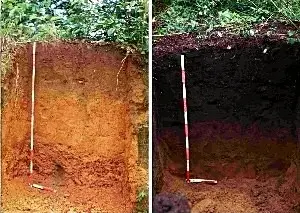
-Terra Preta.
Behold the wonders of biochar as it breathes life into leached, acidic, barren soils, transforming them into vibrant, thriving ecosystems. Terra preta, the fertile black earth, stands as a testament to the power of nature’s alchemy.
Back in the ’70s, organic gardening opened the door to a realm of possibilities. Fast forward to the ’90s, and natural beekeeping revolutionized my world. Today, our planet groans under the weight of humanity’s insatiable hunger for energy, food, water, and fiber. It’s evident to any discerning soul that we’re on a perilous path, one that demands a radical shift, and it’s needed now more than ever.
But what path should we tread? Out west, where coal and oil hold sway, carbon sequestration appears as a beacon of hope. Monolithic structures would funnel carbon dioxide, extracted from flue gas and the air, deep into the earth. With sequestration, fossil fuels could continue to flow unabated. It’s a logical extension of the mindset that led us astray. However, my intuition tells me that relying on the same industrial, tech-driven approach won’t lead us to salvation but instead deeper into the quagmire.
If we seek sustainable solutions, our gaze must turn to nature’s wisdom. Living plants, fueled by the sun’s radiant energy, possess a remarkable ability to capture carbon dioxide. They provide us with energy, nourishment, and textiles—crucial elements for our burgeoning world. The key lies in harnessing their bounty without unleashing carbon back into the atmosphere. And that’s where biochar comes into play.
Have you delved into its secrets? Biochar holds the key to cultivating soils teeming with life, sustaining civilizations for centuries. A treasure trove of knowledge awaits at Bioenergylist.org.
Much like the allure of natural beekeeping, biochar beckons as a path I’ve long sensed to be right.
Producing biochar from crop and forest residues on a commercial scale is carbon-negative. The byproducts fuel the process, with surplus condensates becoming a source for liquid biofuel.
I yearn to experiment with biochar in my garden, but alas, the supply is scarce. Thus, I must craft my own. Thankfully, the art of biochar-making is ancient and easily mastered on a small scale. Dive into Biochar.info and explore the two-barrel retort for detailed guidance.
I’m contemplating this approach. And pondering these ideas.
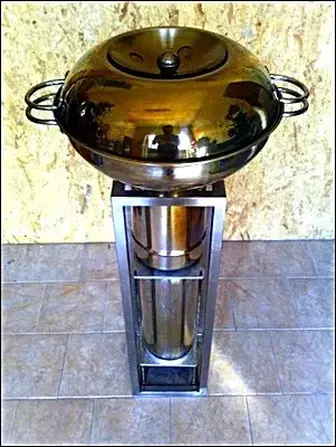
-TLUD based grill from WorldStove.com. How delightful!
Perhaps a TLUD-based grill is the answer. Smaller, more frequent batches of biochar, with fun and feasts on the side. And no old drums cluttering the yard. Biochar seems more appealing by the day. 😊
Natural solutions like biochar enrich the soil, clothe the Earth in green splendor, cool our planet’s fever, and tuck away carbon dioxide in a secure embrace beneath the ground. It’s a quintuple win that steers us back on the path to righteousness. And I’m eager to be part of the journey.
Exciting technologies, like wood gasification and biochar production, offer promising avenues for progress. Across the globe, many still rely on crop and forest residues for heating and cooking, perpetuating a cycle of pollution and deforestation.
But there’s hope. Visionaries have crafted ingenious wood gasifying stoves that mitigate pollution and harness biochar as a byproduct.
Explore further at World Stoves, TLUDs, and Rocket Stoves.
It’s remarkable how a beekeeper’s journey toward natural methods unfolds. Such a focus cannot be contained within boundaries; it permeates every aspect of life. Embracing natural beekeeping isn’t just about the bees—it’s a transformation of one’s relationship with the world. And from this metamorphosis blooms health and vitality, both for the keeper and the planet.
✨
Cheers, D 🌴🌊