
Passion Fruit

Guess what? After a patient wait of about 18 months, they’re finally here!
Passion Fruit vines practically thrive on neglect in sunny South Florida. Pests and diseases? Rarely bother them. Picture this: lush, deep green leaves, and big, showy flowers. Gorgeous, right? And the real magic happens after a bit of hand pollination.
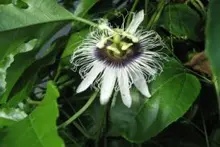

So, here’s the fruit journey: starts as an egg-sized green tomato, then gets less dense, develops spots, turns brown and wrinkled, and finally, gracefully drops off the vine. That’s the signal for harvest time.
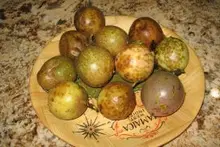
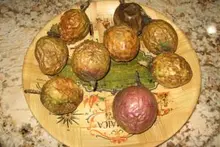
Then it’s harvested. And after a brief stint indoors, they’re ripe and ready to eat. Ironically, the passion fruit is almost as unattractive as the vine is beautiful and the flowers are stunning.
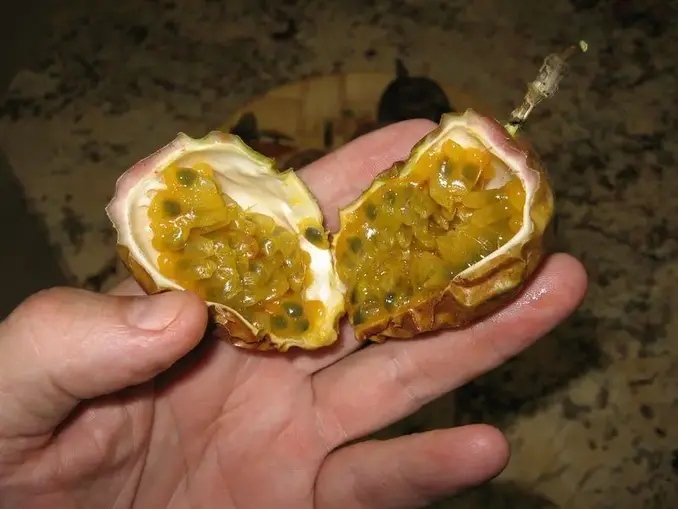
-Passion fruit pulp.
Ripe Passion Fruit doesn’t exactly scream “Eat me!"—they’re about the size of a small lemon with a surprisingly unique aroma. It’s a rich, sweet, tropical scent with hints of guava and distinctive passion fruit highlights.
Once sliced open, the aroma intensifies, revealing a delightfully greenish-yellow, gelatinous, seedy pulp.
But, as with many passionate things, appearances can be deceiving. The pulp, promising so much with its scent, tastes oddly similar to the green pulp around tomato seeds! The delicious aroma seems to vanish during the eating process, maybe hiding in the husk.
The taste? Decent but not mind-blowing. And the pulp quantity? Not overwhelming, which suits me just fine.
Passion Fruit, the first tropical fruit that completely fails to wow me. If only I had tasted it before committing to a trellis and planting several vines —might have kept it as an ornamental in a pot.
✨
Cheers, D 🌴🌊